Metro53 - In a message published this morning in the United States, according to a report by the conservative outlet Newsmax, President Donald Trump sent a written note to the Prime Minister of Norway stating that he no longer feels obligated to “think exclusively about peace” after not receiving the Nobel Peace Prize. In the same message, Trump reiterated his demand for American control.
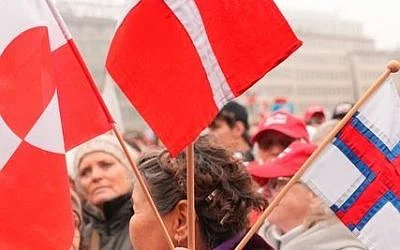
According to the Times of Israel, the message, which was widely circulated by the U.S. administration to other countries as well, was written in response to a brief note sent to Trump by Norwegian Prime Minister Jonas Gahr Store and Finnish President Alexander Stubb. Both leaders expressed opposition to the U.S. decision to impose tariffs on European allies, in the context of their refusal to allow the United States to assume control over Greenland, according to Store’s statement.
This unusual exchange is taking place at a sensitive moment.
The United States is concentrating forces in the Persian Gulf amid popular unrest in Iran, while at the same time the U.S. president has announced the staffing of new frameworks for the reconstruction of the Gaza Strip and a broader political arrangement in the Middle East — including a professional governing body, an executive committee, and the Board of Peace.
The Board of Peace: Contradictions and Sanctions.
It has now emerged that invitations to the Board of Peace were also extended to the President of Pakistan, Turkish President Recep Tayyip Erdoğan, the Emir of Qatar, and even Russian President Vladimir Putin — despite Putin’s deep involvement with Iran, the war in Ukraine, and the sharp rift between Moscow and Europe. Some of these invitations have also raised concerns in Israel.
At the same time, a striking paradox becomes clear:
While heads of state are receiving invitations to the Board of Peace, some of those same countries are facing sanctions in the form of sharply increased customs tariffs on exports to the United States.
Thus, member states of the European Union received notification of an additional tariff of around 10 percent, in the context of their opposition to the American move on Greenland. India, for its part, received a warning of a 25 percent tariff increase due to its ties with Iran — on top of an additional 50 percent, composed of a standard 25 percent tariff and another 25 percent linked to imports of Russian oil.
India and the European Union: Strategic Acceleration.
It is therefore hardly surprising that India and the European Union are accelerating the conclusion of a mutual free trade agreement. Last week, the German chancellor visited India, and in early February French President Emmanuel Macron is expected to do the same.
In the interim, on January 27, a framework agreement for a free trade deal between the two blocs is expected to be signed, covering most of the bilateral trade volume — estimated at approximately €180 billion — with the exception of agricultural trade, whose regulation has been deferred, even though lower tariffs than those currently in place have already been agreed.
The German chancellor also held discussions on strategic issues, including Indian procurement of advanced naval vessels that would strengthen India’s presence in the Indian Ocean and the Persian Gulf; cooperation in the space sector, where close ties already exist between Indian and European space agencies; and the acceleration of planning and implementation of trade corridors linking India to Europe via the Middle East and the Horn of Africa.